
Category
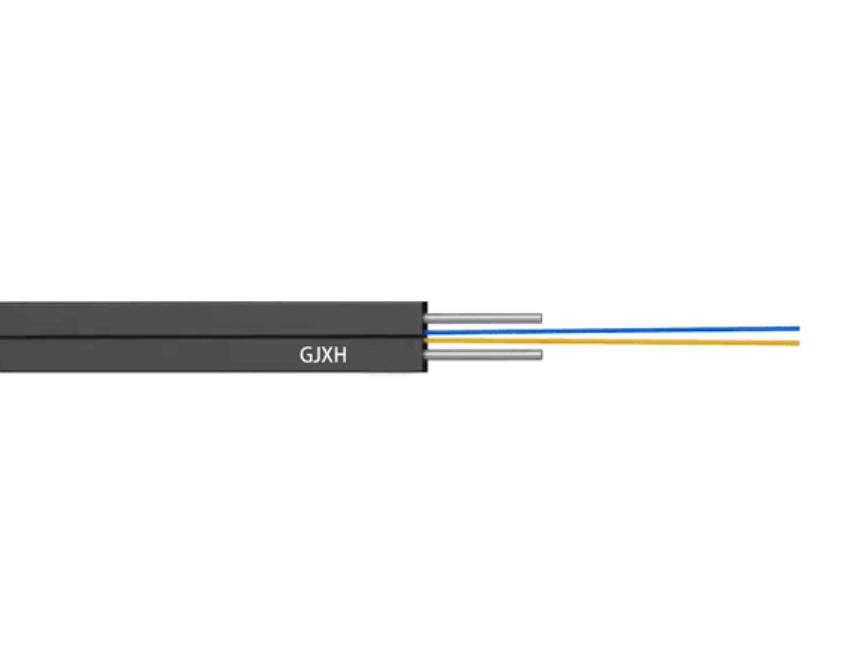
GJXH Fiber Optic Cable
- GJXH cable offers strong indoor connections. You get fast internet using this cable. The 2.0 mm outer diameter makes it fit. The G.657.A2 fiber core sends data quickly. A 0.5 mm steel wire adds strength. The LSZH jacket keeps it safe. Because, minimum bend radius is 30mm.
- A pulling force of 600 N is fine. Crush resistance is 2200N/100mm during installation. Temperature range is -20°C to +60°C, showing resistance. It uses FRP strength members. The cable has 2 fibers inside.
What is a GJXH Fiber Optic Cable?
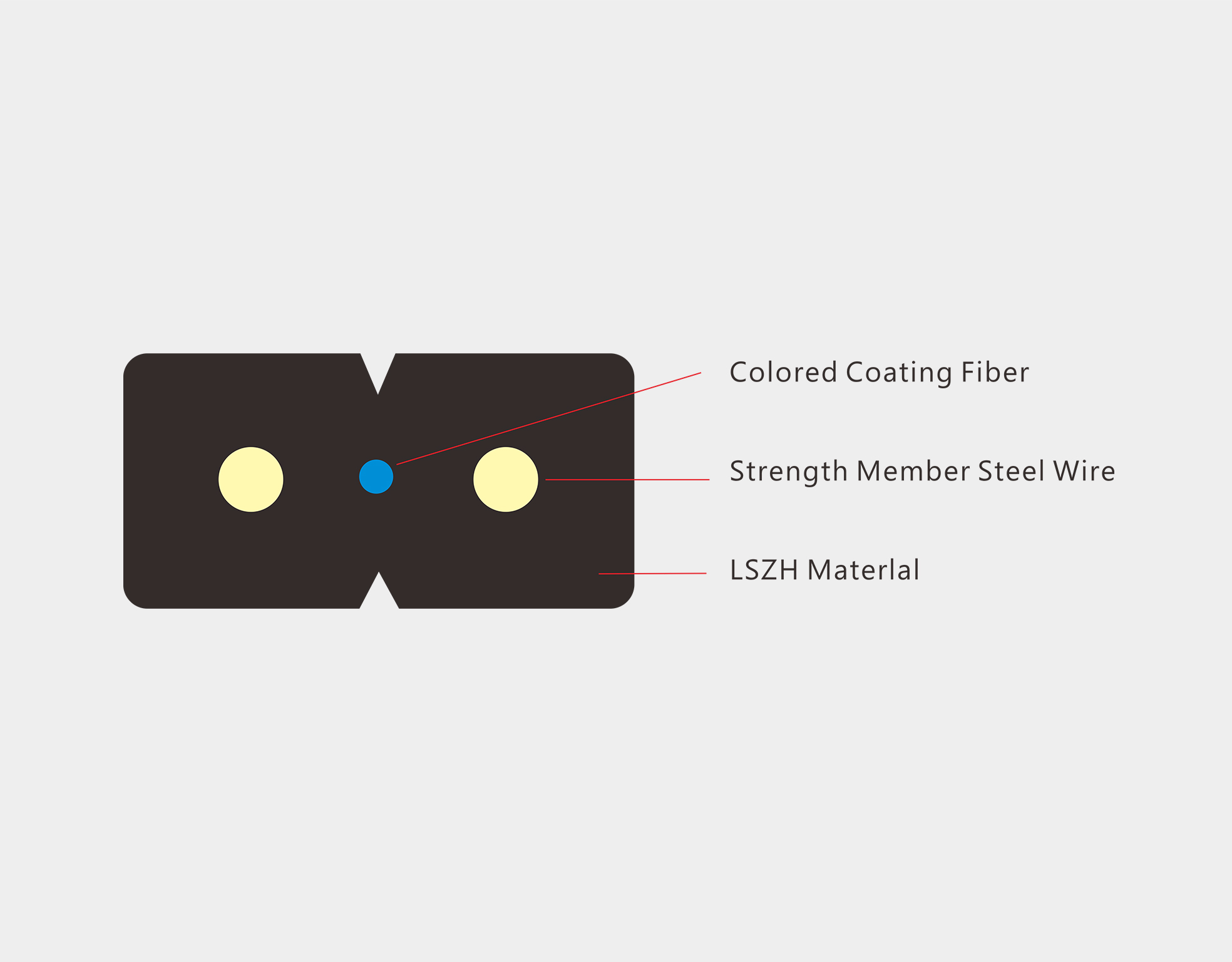
GJXH cable sends data with light. You can find them in FTTH networks. This optical cable has a special flat design. Central loose tube contains optical fiber. Two parallel FRP give additional support, 2.0(±0.1) x 3.0(±0.2) mm dimension. Operating wavelength is 1310/1550 nm.
Maximum attenuation is 0.4 dB/km. Peripheral strengthening element protects fiber. Consequently, jacket material might be PVC . Water blocking tape prevents damaging.
Outer sheath protects from weather. Further, you get reliable signal delivery. A ripcord helps with easy opening. Storage temperature spans from -40°C to 70°C. Because insertion loss remains below 0.3dB. Return loss exceeds 50dB.
GJXH Fiber Optic Cable Specifications
| Parameter | G.657.A1 | G.652.D | G.657.B3 | OS2 | OM3 | OM4 |
| Fiber Count | 1-12 Fibers | 2-24 Fibers | 1-4 Fibers | 4-24 Fibers | 12 Fibers | 8 Fibers |
| Attenuation (1310 nm) | ≤ 0.35 dB/km | ≤ 0.4 dB/km | ≤ 0.30 dB/km | ≤ 0.3 dB/km | ≤ 3.0 dB/km | ≤ 3.0 dB/km |
| Attenuation (1550 nm) | ≤ 0.21 dB/km | ≤ 0.3 dB/km | ≤ 0.19 dB/km | ≤ 0.2 dB/km | ≤ 1.0 dB/km | ≤ 1.0 dB/km |
| Crush Resistance | 1000 N/100mm | 2200 N/100mm | 1500 N/100mm | 3000N | 500 N | 500 N |
| Tensile Strength | 600 N | 800 N | 700N | 1000 N | 100 N | 100 N |
| Operating Temperature | -20°C to +60°C | -40°C to +70°C | -20°C +60°C | -40°C +70°C | -20°C +60°C | -20°C +60°C |
| Min. Bend Radius | 10D Static | 20D Dynamic | 7.5D Static | 30D Static | 7.5D | 7.5D |
Simple Steps for Installing Your GJXH Cable!
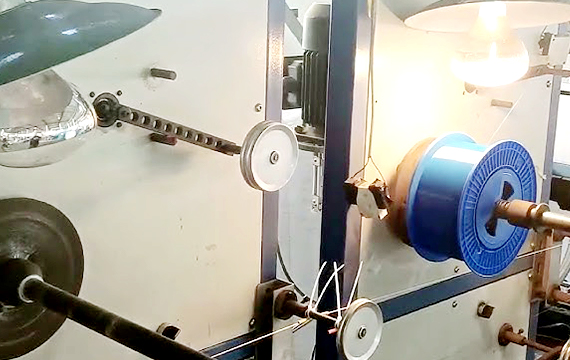
Prepare
First, collect needed items, like a fiber stripper. Examine the cable before you begin installation process. Look for any damage on the outer side. Two strength members help keep shape inside.
You also will need a sharp cable cutter. Ten zip ties hold in secure positioning. Check temperature ranges during installation. Set up your cleaver and some splicing covers. Find the core, usually G.657.B3 fiber type. Ensure pulling does not exceed the limit.
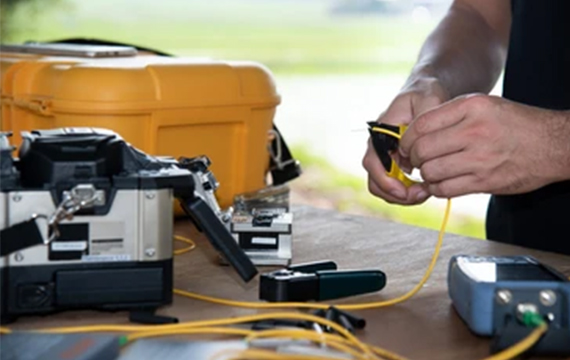
Route
Map out a bending path, keeping curves gentle. Avoid sharp turns to protect data speed. A small duct can shield the fragile cable. Building rules might guide the cable placement.
Secure the cable, using small clips, carefully. Adding staples is beneficial for aerial running. Keep the run at a consistent distance. Figure the full span, before cutting ends. Careful pulling reduces stress on tiny fibers. Finally, find appropriate access spots inside building.
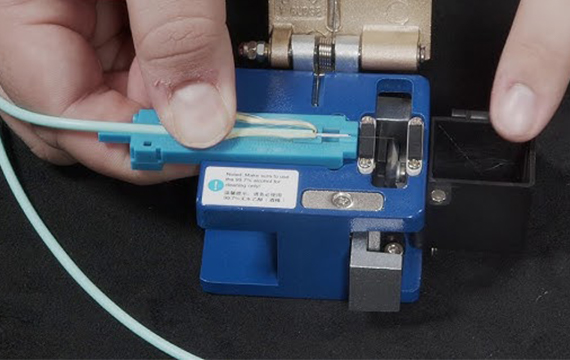
Connect
Begin connecting by carefully removing the outside. A good splicer gives a clean connection point. Put SC/UPC tips on each fiber end. Wipe the ends for clean connections.
The cable ends of gjxh 1b6 fit firmly into the connection point. Then, view to check fiber core alignment. Cover and shield the connection spot carefully. Joined pieces secure transmission of colored light. Use a meter, checking for light passage.
FAQ of GJXH Fiber Optic Cable
What fiber types does GJXH support?
- G.657A2 (Most recommended): Ultra-bend-insensitive, tiny bending loss, suitable for wall corners, under carpet, concealed wiring; attenuation ≤0.35dB/km@1310nm, ≤0.21dB/km@1550nmMade-in-Ch…
- G.657A1: Standard bend-resistant fiber, cost-effective for regular straight routing
- G.652D: Conventional single-mode fiber, only used for long straight indoor pipelines, poor anti-bending performance
Standard core counts & dimensions of GJXH?
- 1-core: Single blue tight-buffered fiber
- 2-core: Blue + orange
- 4-core: Blue, orange, green, brown
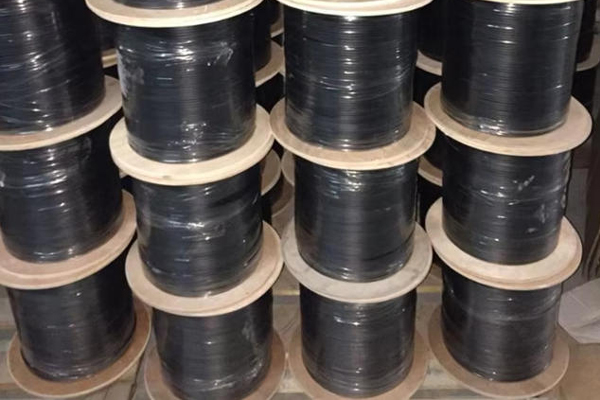
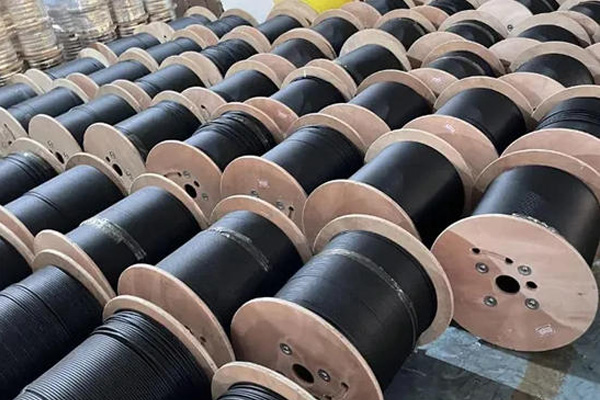
Cable weight: ~8–11kg/km; standard wooden reel packing: 1km / 2km per reel
Two sheath options: LSZH vs PVC, how to choose?
LSZH (Low Smoke Zero Halogen) – Default for GJXH
- Pros: Flame retardant, low smoke density, no toxic halogen gas during combustion; mandatory for residential buildings, high-rises, shopping malls, fire escape passages, European & Southeast Asian export projects, CE/ROHS certified.
- Cons: Higher material cost, slightly harder texture.
- PVC Sheath
- Pros: Low cost, soft texture, easy stripping.
- Cons: Releases dense toxic smoke when burning; only allowed for temporary low-rise simple indoor wiring, prohibited in public high-density buildings.
What are the mechanical performance parameters of GJXH steel wire type?
- Tensile force: Long-term 100N / Short-term 200N
- Crush resistance: Long-term 1000N/100mm / Short-term 2000N/100mm
- Bend radius: Static ≥20×cable diameter; Dynamic ≥40×cable diameter
- Impact & torsion test: No fiber breakage, extra loss ≤0.1dB@1550nm after test
Operating & storage temperature range?
- Long-term operation: -40℃ ~ +60℃
- Construction installation temperature: -20℃ ~ +50℃
- Transportation & storage: -40℃ ~ +70℃
Cannot install under sub-zero temperature without preheating, to avoid sheath cracking.
Where is GJXH applied? Can it be used outdoors?
Indoor-only cable, NOT for direct outdoor aerial/underground burial
Main application scenarios:
- FTTH last-mile indoor entry: From building distribution box to household optical modem
- Indoor corridor concealed wiring, wall surface routing, skirting board, under carpet
- Small office LAN, building security monitoring fiber wiring
- Indoor CATV + internet dual-service transmission
How to strip GJXH quickly without damaging fiber?
- Use a dedicated drop cable stripper to clamp the flat cable at the middle notch
- Squeeze gently to split the sheath along the notch, pull the two steel wires outward
- Cut off excess steel wire, strip 3–5mm tight buffer layer to expose bare fiber for splicing/connector termination
Warning: Do not cut the steel wire too short, reserve 2–3cm for tensile fixation at the junction box.
Related Products
Share GJXH Fiber Optic Cable to Your Social Media
Ultimate FAQ Guide to Fiber Optic Cable
What types of fiber optic cables do you manufacture?
Our factory produces a wide range of fiber optic cables for different applications:
Outdoor Fiber Optic Cable
- ADSS Fiber Optic Cable
- OPGW Fiber Optic Cable
- GYTA Fiber Optic Cable
- GYTS Fiber Optic Cable
- GYXTW Fiber Optic Cable
- Armored Fiber Optic Cable
- Direct Burial Fiber Cable
- Duct Fiber Optic Cable
- Aerial Fiber Optic Cable
FTTH Fiber Optic Cable
- FTTH Drop Cable
- GJYXCH
- GJYXFCH
- Indoor Fiber Cable
Special Fiber Optic Cable
- Submarine Fiber Optic Cable
- ASU Fiber Optic Cable
- Hybrid Fiber Cable
- Air Blown Fiber Cable
We can provide fiber optic cable solutions for telecom operators, ISPs, contractors, distributors, and government projects.
Where is your fiber optic cable factory located?
Our fiber optic cable manufacturing facility is located in China, with modern production lines and complete testing equipment.
The factory includes:
- Fiber drawing and coloring equipment
- Cable extrusion production lines
- SZ stranding machines
- Armoring production lines
- Optical performance testing equipment
- Mechanical performance testing equipment
We have the ability to produce large-volume orders while maintaining consistent quality.
What is your monthly production capacity?
Our factory has strong production capacity to support both small and large projects.
Typical production capacity:
- ADSS Cable: thousands of kilometers per month
- GYTA/GYTS Cable: large-scale continuous production
- FTTH Drop Cable: high-speed mass production
For large projects, we can arrange dedicated production schedules to ensure stable delivery.
Can you provide customized fiber optic cables?
Yes. We provide OEM and ODM customization services according to customer requirements.
Customization options include:
- Fiber count (2 cores, 4 cores, 12 cores, 24 cores, 48 cores, 96 cores, 144 cores, etc.)
- Fiber type (G652D, G657A1, G657A2, OM1, OM2, OM3, OM4)
- Cable structure
- Jacket material
- Cable color
- Printing information
- Reel size
- Packaging requirements
Our engineering team can recommend the most suitable cable design based on your installation environment.
What fiber types do you use?
We mainly use high-quality optical fibers from reliable suppliers.
Available fiber types:
Single Mode Fiber
- G652D
- G657A1
- G657A2
Multimode Fiber
- OM1
- OM2
- OM3
- OM4
G652D is commonly used for backbone networks, while G657A1/A2 is widely used for FTTH applications because of its excellent bending performance.
What standards do your fiber optic cables meet?
Our fiber optic cables comply with international standards, including:
- IEC standards
- ITU-T recommendations
- RoHS requirements
- ISO quality management standards
Different cable types can meet specific requirements such as:
- IEC 60794 Fiber Optic Cable Standard
- ITU-T G.652/G.657 Fiber Standard
- ASTM and customer-specific requirements
How do you guarantee fiber optic cable quality?
Quality control is one of our factory priorities.
Each production stage is strictly inspected:
Raw Material Inspection
- Optical fiber quality
- Strength member
- Jelly compound
- HDPE jacket material
Production Testing
- Fiber attenuation testing
- Tensile strength testing
- Crush resistance testing
- Temperature cycling testing
Final Inspection
- Optical performance test
- Appearance inspection
- Length verification
- Packaging inspection
Every cable shipment is tested before delivery.
What testing equipment do you have?
Our factory uses professional testing equipment, including:
- OTDR testing equipment
- Tensile testing machines
- Crush resistance testers
- Environmental testing chambers
- Fiber attenuation testers
- Diameter measurement equipment
These tests ensure cable reliability during installation and long-term operation.
What is the minimum order quantity (MOQ)?
MOQ depends on the cable type and specifications.
Typical MOQ:
- Standard fiber optic cable: flexible MOQ
- Customized cable: depends on production requirements
- Large projects: negotiated according to project volume
Please contact our sales team for a customized quotation.