
Category
Fiber Optic Cable Clamps
- Fiber optic cable clamps are mechanical hardware components used to secure, support, tension, or route fiber optic cables during aerial, outdoor, FTTH, and telecommunications network installations. The correct clamp helps prevent cable movement, excessive bending, sheath damage, and mechanical stress, improving the long-term reliability of the fiber optic network.
What Are Fiber Optic Cable Clamps?
A fiber optic cable clamp is a cable-support or fastening device designed to hold a fiber optic cable in a specific position. Depending on the cable type and installation environment, clamps may be used on utility poles, building walls, messenger wires, towers, racks, or other supporting structures.
Unlike ordinary electrical cable clamps, fiber optic cable clamps must be designed around the mechanical characteristics of optical cables. Excessive compression, improper tension, or a bend radius that is too small can damage the cable structure and potentially increase optical attenuation.
Materials Used for Fiber Optic Cable Clamps
Common materials include:
| Material | Typical Characteristics |
|---|---|
| Stainless steel | High corrosion resistance and mechanical strength |
| Galvanized steel | Strong and economical for outdoor installations |
| Aluminum alloy | Lightweight and corrosion resistant |
| UV-resistant plastic | Lightweight and suitable for FTTH drop cables |
| Engineering polymer | Good insulation and weather resistance |
| Rubber/Elastomer | Provides cushioning and reduces cable pressure |
For outdoor telecommunications networks, UV resistance, corrosion resistance, temperature stability, and mechanical strength are important considerations.
Main Types of Fiber Optic Cable Clamps
Different fiber optic cables require different types of clamps.
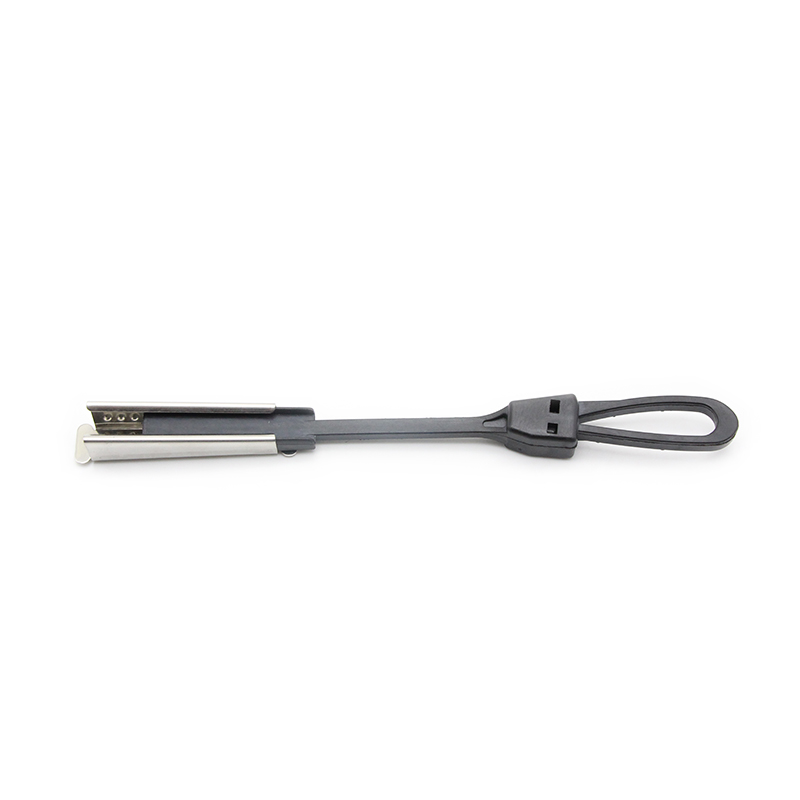
FTTH Flat Drop cable Clamp
FTTH drop cable clamps are designed for lightweight fiber drop cables used in last-mile networks.
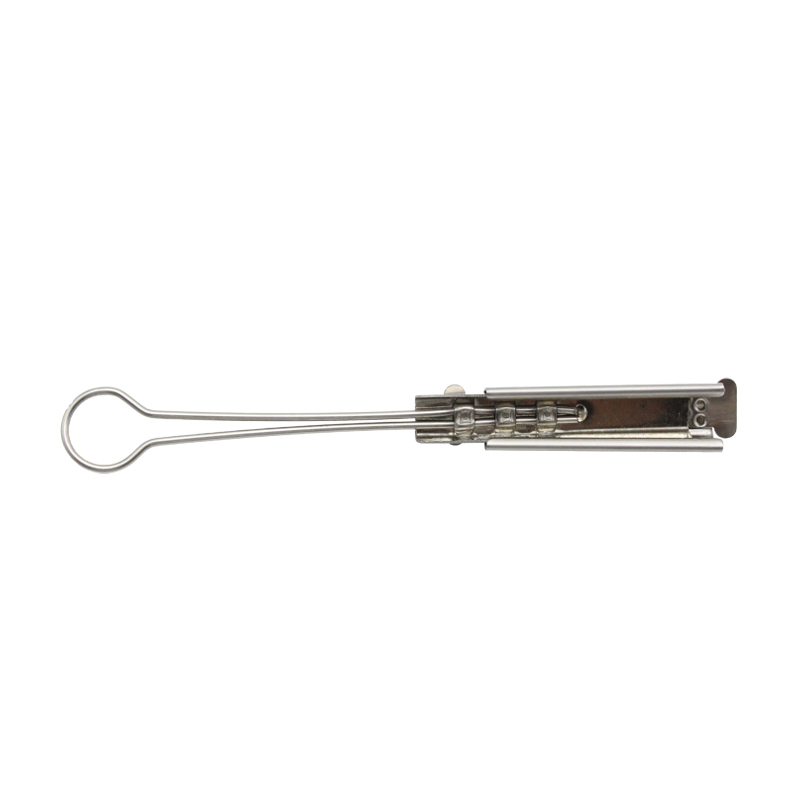
FTTH Round Drop cable Clamp
FTTH drop cable clamps are designed for lightweight fiber drop cables used in last-mile networks.
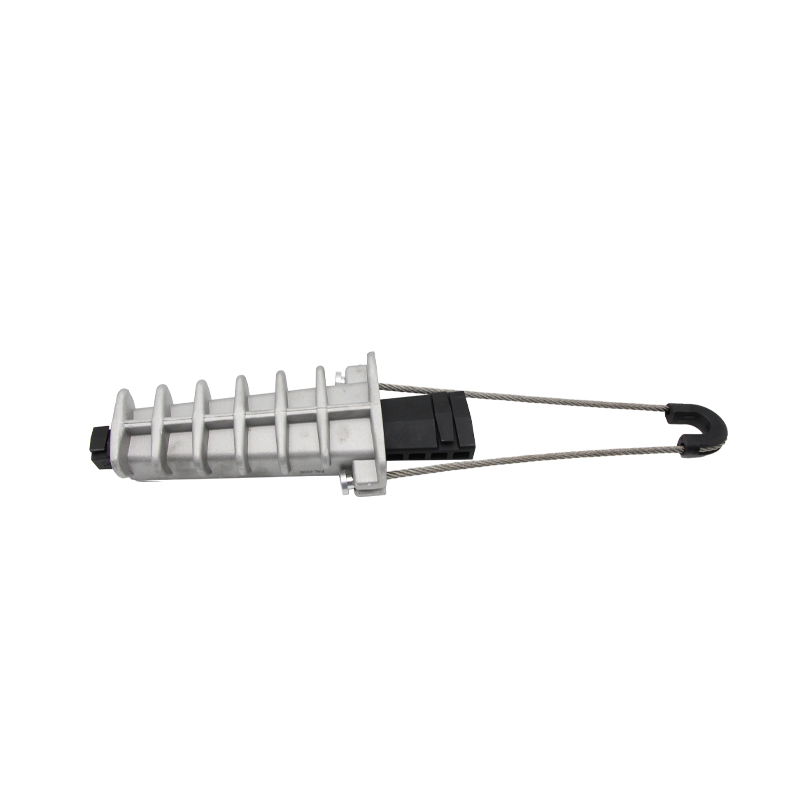
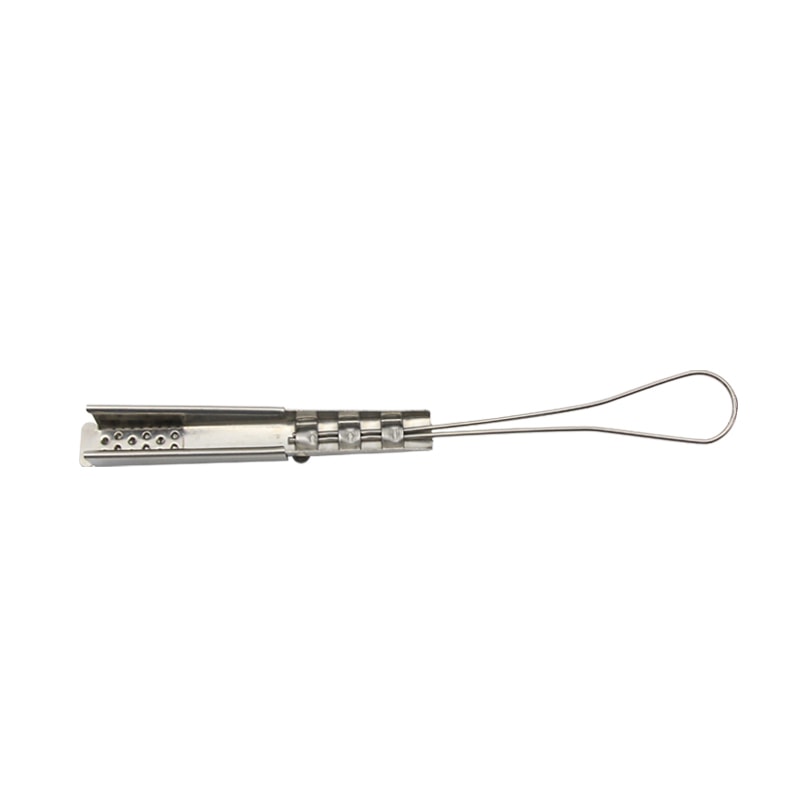
ADSS cable Anchor Clamp
ADSS cable clamps are specifically designed for All-Dielectric Self-Supporting (ADSS) fiber optic cables.
Materials Used for Fiber Optic Cable Clamps
Common materials include:
| Material | Typical Characteristics |
|---|---|
| Stainless steel | High corrosion resistance and mechanical strength |
| Galvanized steel | Strong and economical for outdoor installations |
| Aluminum alloy | Lightweight and corrosion resistant |
| UV-resistant plastic | Lightweight and suitable for FTTH drop cables |
| Engineering polymer | Good insulation and weather resistance |
| Rubber/Elastomer | Provides cushioning and reduces cable pressure |
For outdoor telecommunications networks, UV resistance, corrosion resistance, temperature stability, and mechanical strength are important considerations.
Main Types of Fiber Optic Cable Clamps
Different fiber optic cables require different types of clamps.
ADSS Cable Clamps
ADSS cable clamps are specifically designed for All-Dielectric Self-Supporting (ADSS) fiber optic cables.They are commonly divided into:ADSS suspension clamps ADSS anchor/dead-end clamps Preformed line grips Span clamps Pole-mounted clampsSuspension clamps are normally used where the cable passes continuously along an aerial route, while dead-end clamps are used where the cable needs to be terminated or tensioned.
FTTH Drop Cable Clamps
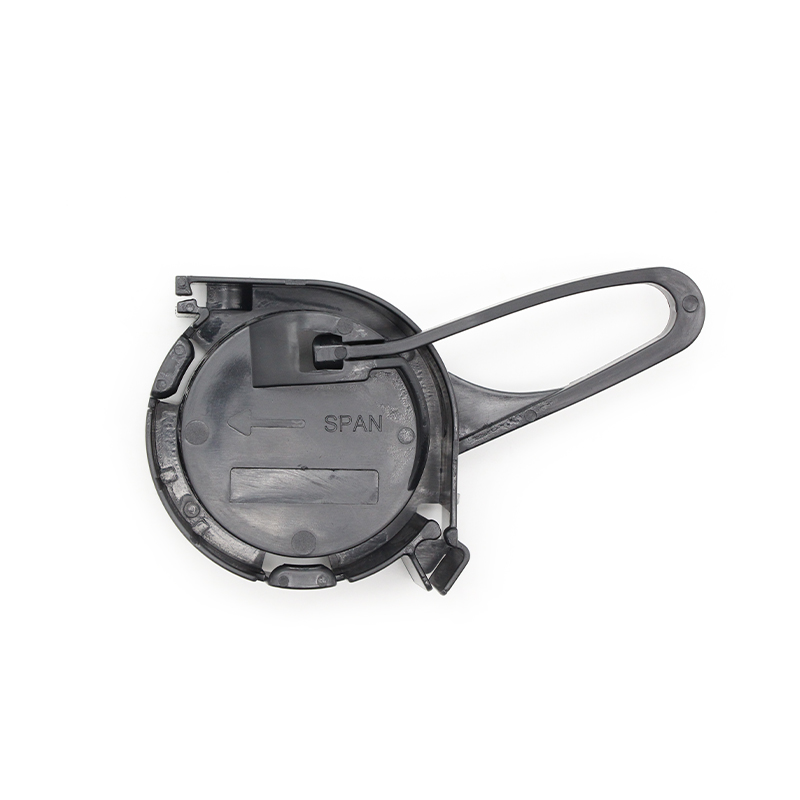
FTTH drop cable clamps are designed for lightweight fiber drop cables used in last-mile networks.Typical applications include:Residential FTTH installations Building entrances Outdoor walls Distribution poles Customer premises Access networksThese clamps are generally compact and lightweight and may use plastic, stainless steel, galvanized steel, or combinations of these materials.
Fiber Optic Cable Clamp Installation Tips
A proper installation should follow the cable manufacturer’s specifications.
Step 1: Identify the cable.
Check the cable construction, diameter, tensile rating, and recommended hardware.
Step 2: Select the appropriate clamp.
Make sure the clamp is compatible with the cable and installation structure.
Step 3: Check the cable route.
Avoid sharp edges, excessive bending, and unnecessary mechanical stress.
Step 4: Install the clamp correctly.
Follow the manufacturer’s installation procedure and recommended tightening force.
Step 5: Check the bend radius.
Do not force the cable into a bend smaller than its specified minimum bend radius.
Step 6: Inspect the finished installation.
Verify that the cable is securely supported without excessive compression.
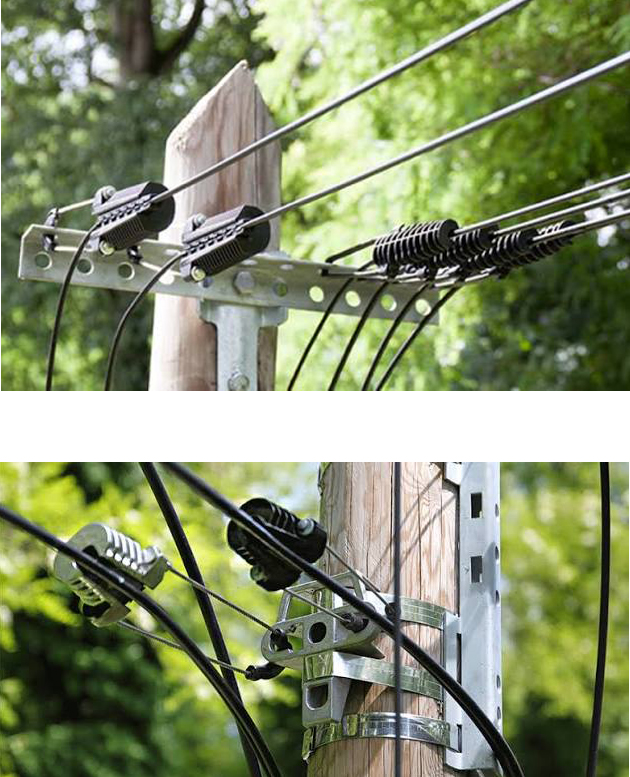
Related Products
Share Fiber Optic Cable Clamps to Your Social Media
Ultimate FAQ Guide to Fiber Optic Cable Clamps
What is a fiber optic cable clamp used for?
It is used to secure, support, suspend, or anchor fiber optic cables while controlling mechanical stress and cable movement.
Are fiber optic cable clamps suitable for ADSS cables?
Yes. Specialized ADSS suspension clamps and dead-end clamps are specifically designed for ADSS aerial fiber optic cables.
Can I use the same clamp for all fiber optic cables?
No. Clamp selection depends on cable diameter, construction, tensile requirements, span length, and installation environment.
What materials are commonly used?
Stainless steel, galvanized steel, aluminum alloys, engineering plastics, and UV-resistant polymers are commonly used.
How do I choose the correct clamp size?
Start with the cable’s outside diameter and cable type. Then check the clamp manufacturer’s compatible diameter range and mechanical load specifications.
Can cable clamps damage fiber optic cables?
Improperly selected or excessively tightened clamps can potentially damage the cable jacket or create excessive mechanical stress. The clamp should therefore be correctly matched to the cable.